<?xml version="1.0" encoding="UTF-8"?>
<feed xmlns="http://www.w3.org/2005/Atom">
  <title type="text">Emmett Till Memory Project</title>
  <updated>2026-04-17T19:39:38+00:00</updated>
  <generator uri="http://framework.zend.com" version="1.12.20">Zend_Feed_Writer</generator>
  <link rel="alternate" type="text/html" href="https://tillapp.emmett-till.org/"/>
  <link rel="self" type="application/atom+xml" href="https://tillapp.emmett-till.org/items/browse?output=rss2"/>
  <id>https://tillapp.emmett-till.org/</id>
  <author>
    <name>Emmett Till Memory Project</name>
    <uri>https://tillapp.emmett-till.org</uri>
  </author>
  <link rel="hub" href="https://pubsubhubbub.appspot.com/"/>
  <entry>
    <title type="html"><![CDATA[Homesite of J. W. Milam: The Site of an Influential Fiction]]></title>
    <summary type="html"><![CDATA[<img src="https://tillapp.emmett-till.org/files/fullsize/255df4a5e79d52c311a923999fa42f4e.jpg" alt="Tallahatchie Civil Rights Driving Tour sign, Milam&#039;s House. " /><br/><p>In 2008, the Emmett Till Memorial Commission (ETMC) erected a sign at this spot. Although nothing remains except an overgrown field, in 1955 this was the site of J.W. Milam's home and, critically, his shed.</p><p>The sign claims that Till was beaten here in the shed that once stood on this spot. This is not true.</p><p>When they wrote this sign, the ETMC was following the story told by <em>LOOK</em> magazine in January of 1956. Titled "The Shocking Story of Approved Killing in Mississippi," the <em>LOOK</em> article was one of the most influential versions of Till's story ever told. And it was virtually 100% false.</p><p>Since the murderers had already been acquitted in a court of law, <em>LOOK</em> magazine refused to print the story unless every named participant signed a waiver (see the documents for an example).</p><p>In fact, Till was tortured at the Seed Barn on the Milam Plantation in Sunflower County--27 miles west. But the barn was run by Leslie Milam (J.W.'s brother). Leslie did not sign a release form and could not be included in the story. So Huie moved the torture here, to J. W. Milams' shed in Glendora.</p><p>Ironically, barely 500 feet west of this sign is another ETMC sign commemorating King's Place, where the black journalist Jimmy Hicks learned about Levi "Too Tight" Collins and Henry Lee Loggins. But Collins and Loggins are only involved if the torture happened in Sunflower County. This means that the two signs, both erected by the ETMC in 2008, are mutually exclusive.</p><p>If Collins and Loggins were key witnesses, then King’s Place is a historic site but Milam’s shed is not. Alternately, if Milam’s shed is a historic site, then Collins and Loggins were red herrings and King’s Place was the site where the black press lost the story.</p><p><em><strong><a href="https://tillapp.emmett-till.org/items/show/15">For more (including 3 images) view the original article</a></strong></em></p>]]></summary>
    <published>2019-07-18T20:43:54+00:00</published>
    <updated>2026-04-17T19:39:38+00:00</updated>
    <link rel="alternate" type="text/html" href="https://tillapp.emmett-till.org/items/show/15"/>
    <id>https://tillapp.emmett-till.org/items/show/15</id>
    <author>
      <name>Dave Tell </name>
    </author>
  </entry>
  <entry>
    <title type="html"><![CDATA[King&#039;s Place: How an Anonymous Tip, a Juke Joint, and Two Lost Witnesses could have changed the course of history. ]]></title>
    <summary type="html"><![CDATA[<img src="https://tillapp.emmett-till.org/files/fullsize/a0c64f6cf28026b3c8c92b1ccc717b4c.jpg" alt="Tallahatchie Civil Rights Driving Tour King&#039;s Place sign. " /><br/><p>On Sunday, September 18, 1955, reporter James Hicks of the <em>Afro-American</em> was in Sumner preparing to cover the Emmett Till murder trial. Looking for a pre-trial story, Hicks stopped by the biracial funeral of “Kid” Townsend—a well-liked black man who had recently passed of a heart attack. Because there were no seats available in the church, Hicks listened to preacher W. M. King from outside. While he was standing there, a stranger approached him, asked if he was covering the Till trial, and, upon learning that he was, urged Hicks to walk behind a nearby car and talk to the woman he found there. Hicks did as he was told. The woman behind the car confided to Hicks that a local black man known to her only as “Too Tight” was with Emmett Till the night of the murder but had not been seen since. Should Hicks want more information, she told him to go to King’s Place, a juke joint in Glendora.
Hicks drove directly to King’s Place. He asked the manager about the mysterious “Too Tight” and was directed to a woman. He flirted with the woman in order to gain information. He danced with her, asked her if he could take her out for drinks, and promised to come back to see her (which he never did). It worked. By the time Hicks left King’s Place around dinner time, he had learned a number of important facts about the Till murder—facts that were true but which would be disregarded in the trial and, in large part, forgotten by history.
The woman told Hicks that Levi “Too Tight” Collins lived with her and her husband, Henry Lee Loggins. Both Collins and Loggins worked for J. W. Milam and, on the night of the murder, Milam fetched them both to help with the abduction and murder. Both men accompanied the murder party to the Milam Plantation west of Drew (in Sunflower County) where Till was tortured and, according to Milam’s later admissions, killed.
Collins and Loggins were thus, in all probability, eyewitnesses to the murder of Emmett Till. Although Loggins publicly denied this for years (most dramatically on <em>60 Minutes</em> in 2005), it is rumored that he confessed his involvement to his son, Johnny B. Thomas, current Mayor of Glendora, before passing.
Despite a vigorous effort to find Collins and Loggins—and to plead with them to testify—they proved elusive. The woman at King’s Place told Hicks that the two men had been put in the county jail in Charleston, 28 miles away, to keep them away from the trial. Prosecutors Gerald Chatham and Robert Smith, however, claimed to search the jail twice with little luck.
Despite the fact that Collins and Loggins were not found before the trial (and hence could not testify), the information Hicks discovered at King’s Place is of immense value. The fact that Collins and Loggins were involved in the murder puts the lie to the story pedaled by <em>LOOK</em> Magazine. That story—the story which dominated the memory of Emmett Till for the majority of the century—restricted the murder party to the two people who had already been acquitted (J. W. Milam and Roy Bryant) and placed the site of the murder near Glendora, on the banks of the Tallahatchie River. The story Hicks discovered at King’s Place challenges these conclusions: it suggests that more people were involved than simply those who were tried, and it places the murder site in Drew—a fact that would implicate even more people. </p><p><em><strong><a href="https://tillapp.emmett-till.org/items/show/11">For more (including 2 images) view the original article</a></strong></em></p>]]></summary>
    <published>2019-07-17T16:19:51+00:00</published>
    <updated>2026-04-17T19:39:38+00:00</updated>
    <link rel="alternate" type="text/html" href="https://tillapp.emmett-till.org/items/show/11"/>
    <id>https://tillapp.emmett-till.org/items/show/11</id>
    <author>
      <name>Dave Tell </name>
    </author>
  </entry>
  <entry>
    <title type="html"><![CDATA[Emmett Till Historic Intrepid Center: The ETHIC Musuem]]></title>
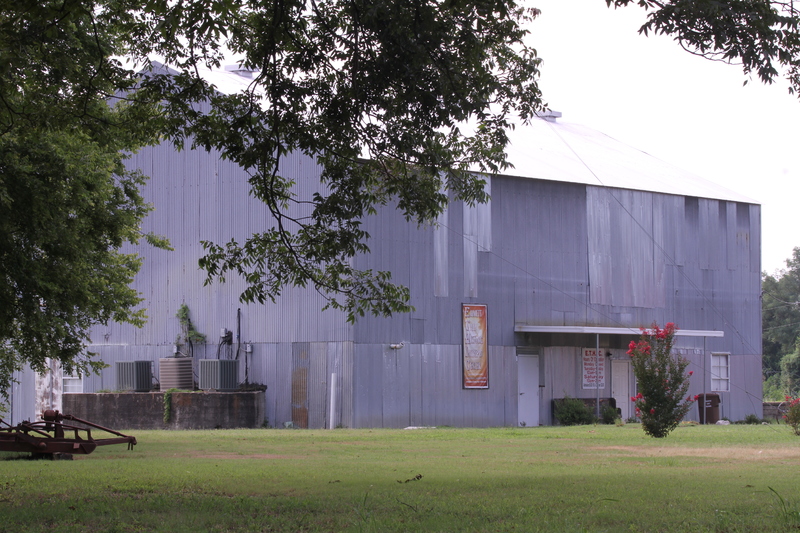
    <summary type="html"><![CDATA[<p><strong><em>Originally the Glendora Cotton Gin, Glendora Mayor Johnny B. Thomas transformed this building into one of the earliest Till museums in the world: the Emmett Till Historic Intrepid Center (the ETHIC museum). </em></strong></p><img src="https://tillapp.emmett-till.org/files/fullsize/a6376ce6441353ec294525543f2ae5cc.jpg" alt="Emmett Till Historic Intrepid Center, Glendora, MS. ~2015. " /><br/><p>The story told in the ETHIC museum is unique on two counts.
First, while virtually every 20th-century history of Till’s murder suggests that the murderers dropped the body in the Tallahatchie River, the commemorative work in Glendora suggests that Till was dropped into a tributary known as the Black Bayou from a bridge on the south side of Glendora. According to this account, the bayou then carried Till’s body for 3 miles to the Tallahatchie River, where it was recovered near Graball Landing.
Second, while no historian has been able to claim with certainty where the murderers obtained the fan they used to weigh down Till’s corpse, the Glendora museum claims that the fan was stolen from this site, the Glendora Cotton Gin, presumably by Elmer Kimbrell, a gin employee and the next-door neighbor of confessed murderer J.W. Milam.
While these variations on the finer points of Till’s story are contested, to Glendora residents they are matters so weighty that it seems as if the very future of the town hinges on where Till’s body was dropped in the water and what fan weighed it down.
In 2010, the Mississippi Development Authority sent a team of economic development experts to Glendora. Their charge was to devise a plan to rescue the town from poverty — a tall order. Glendora is marked by breathtaking poverty with a median household income 70% below the state average. 
The team struggled to find solutions. Aside from the unrealistic suggestion that the town turn the snake-infested land along the bayou into “riverfront property,” their only other proposal was that Glendora capitalize on its connection to the Till murder. More commemoration, they said, would bring tourists; tourism would beget economic development. The viability of this suggestion, of course, turned on a version of Till’s story that maximized the relevance of Glendora. 
None of this was news to Glendora Mayor Johnny B. Thomas. Since at least 2005, he had been promoting a Glendora-centric narrative of the murder in which Till’s body was dropped in the Black Bayou tied with a fan from the local gin.
While these are both plausible claims, Thomas’s efforts have been undermined by a consistent antagonist: the Mississippi Department of Archives and History (MDAH).
The MDAH has invested more funds into Till’s commemoration than any other organization. It restored the Tallahatchie County Courthouse, the site of the Till trial, and even invested more than $200,000 in the controversial restoration of Ben Roy’s Service Station in Money.
The agency, however, is not convinced that Till’s body was dropped from the Black Bayou Bridge. Nor does the organization believe that the fan was stolen from the local gin. It has thus rejected every grant application the town has ever submitted. Locals are quick to point out that the MDAH funded the white memorial in Money (despite its implausability) but denied the all-black town of Glendora (despite its plausability). </p><p>Mayor Thomas (and the entire town of Glendora) was in a bind. They had one state agency (the MDA) telling them to invest in Till commemoration and a second state agency (the MDAH) blocking their every attempt to do so. </p><p>While some people might give up, Mayor Thomas got creative. </p><p>By leveraging the poverty of the town, he has obtained grant money from other sources. The work began on Sept. 27, 2005. On that day, the U.S. Department of Agriculture awarded a Community Connect Broadband Grant to Glendora. Funded at $325,405, the grant was intended to bring broadband connectivity to Glendora. Thomas used the grant to both provide broadband <em>and</em> build the first version of the ETHIC museum. In April 2010, he received an IMLS grant to professionalize the museum.
The USDA grant program was intended to alleviate poverty. The Mayor’s ingenuity and creativity was able to bend those dollars to create a much-needed museum. </p><p>And yet, questions remain unanswered. Was Emmett Till actually dropped from the Black Bayou Bridge? Was the fan stolen from a local gin? Was Elmer Kimbrell involved?
Perhaps. But it is impossible to separate the truthfulness of these claims from the poverty of the townspeople. Thomas has leveraged the town’s poverty to build a museum, and the museum, in turn, supports Glendora’s plausible-but-unverifiable theories of the murder.
Had Glendora been wealthy, Thomas would have had no claim on federal dollars, and there would be no museum. But Glendora is not wealthy. And for this reason, stories about Kimbell, the gin, and the bridge continue to circulate, supported by nothing but the poverty of the town.</p><p>In 2008, this site was one of four Glendora sites added to the Tallahatchie Civil Rights Driving Tour created by the Emmett Till Memorial Commission. </p><p><em><strong><a href="https://tillapp.emmett-till.org/items/show/5">For more (including 8 images) view the original article</a></strong></em></p>]]></summary>
    <published>2019-07-16T14:16:55+00:00</published>
    <updated>2026-04-17T19:39:38+00:00</updated>
    <link rel="alternate" type="text/html" href="https://tillapp.emmett-till.org/items/show/5"/>
    <id>https://tillapp.emmett-till.org/items/show/5</id>
    <author>
      <name>Dave Tell</name>
    </author>
  </entry>
  <entry>
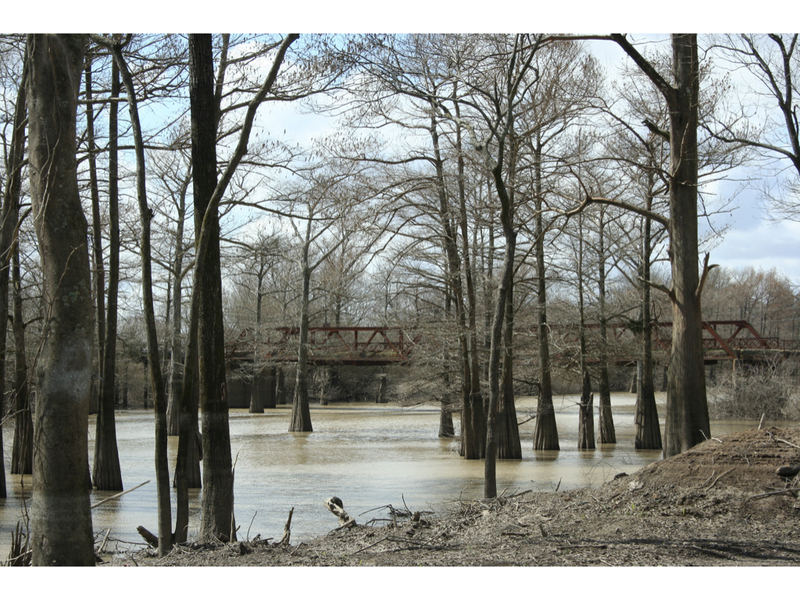
    <title type="html"><![CDATA[Black Bayou Bridge: Till&#039;s body may have been dropped in the water from this bridge.]]></title>
    <summary type="html"><![CDATA[<p><strong><em>Many people believe that this bridge may have been the spot that the body of Emmett Till was dropped into the water. Approximately two miles east of this spot, the Bayou spills into the Tallahatchie River. At the confluence of the two rivers is a site called Graball Landing; it is marked by an Emmett Till Memorial Commission sign as the site where Till’s body may have been recovered from the river. </em></strong></p><img src="https://tillapp.emmett-till.org/files/fullsize/157b85a15899602d261c7f26c1f702a5.jpg" alt="Black Bayou Bridge" /><br/><p>The strongest argument in favor of the theory that Till was thrown off this bridge and recovered at Graball Landing is its intuitiveness. This site is immediately adjacent to both J. W. Milam’s home (where Till’s clothes were burned) and the Glendora Cotton Gin (where they could have easily secured the fan with the help of Milam’s neighbor Elmer Kimbell, who worked at the gin). Because the murderers were in a race with daybreak to dispose of the body as quickly as possible, they certainly would have appreciated the proximity of this bridge. Heightening the credibility of this theory is the fact that this road was closed permanently sometime in 1955. 
Beyond the intuitive convenience of the theory, the Black Bayou Bridge theory has a strong advocate in Glendora Mayor Johnny B. Thomas. Thomas has used the Emmett Till Historic Intrepid Center (a Till museum just up the road) to advocate for this theory for years. </p><p>Thomas has a vested interest in this site. In 2010, the Mississippi Development Authority advised him that Emmett Till tourism represented the best chance at economic development for the town. The more the story of Till's murder centers on Glendora, the more tourists will have reason to come, and the more economic development will follow. </p><p>But quite apart from matters of tourism, Thomas does have an interesting story. He claims that his father was Henry Lee Loggins—Milam’s “right hand” man who was widely rumored to be personally involved in the murder.
According to African American journalist James L. Hicks, Loggins and Levi “Too Tight” Collins (both black men) were forced by J. W. Milam to participate in the torture and murder of Emmett Till before being jailed in Charleston on trumped up charges to keep them away from the investigation. Defense attorney J. J. Breland later confirmed that Loggins and Collins were held on false charges to prevent them from testifying. 
Although Loggins publicly denied all involvement his entire life (most publicly on <em>60 Minutes</em>), there are rumors that he made a deathbed confession to his son. If true, it means that Thomas’s claim that the body was thrown over this bridge might be based on Loggin's personal involvement.</p><p><em><strong><a href="https://tillapp.emmett-till.org/items/show/2">For more (including 5 images) view the original article</a></strong></em></p>]]></summary>
    <published>2019-07-15T21:15:51+00:00</published>
    <updated>2026-04-17T19:39:38+00:00</updated>
    <link rel="alternate" type="text/html" href="https://tillapp.emmett-till.org/items/show/2"/>
    <id>https://tillapp.emmett-till.org/items/show/2</id>
    <author>
      <name>Dave Tell </name>
    </author>
  </entry>
</feed>